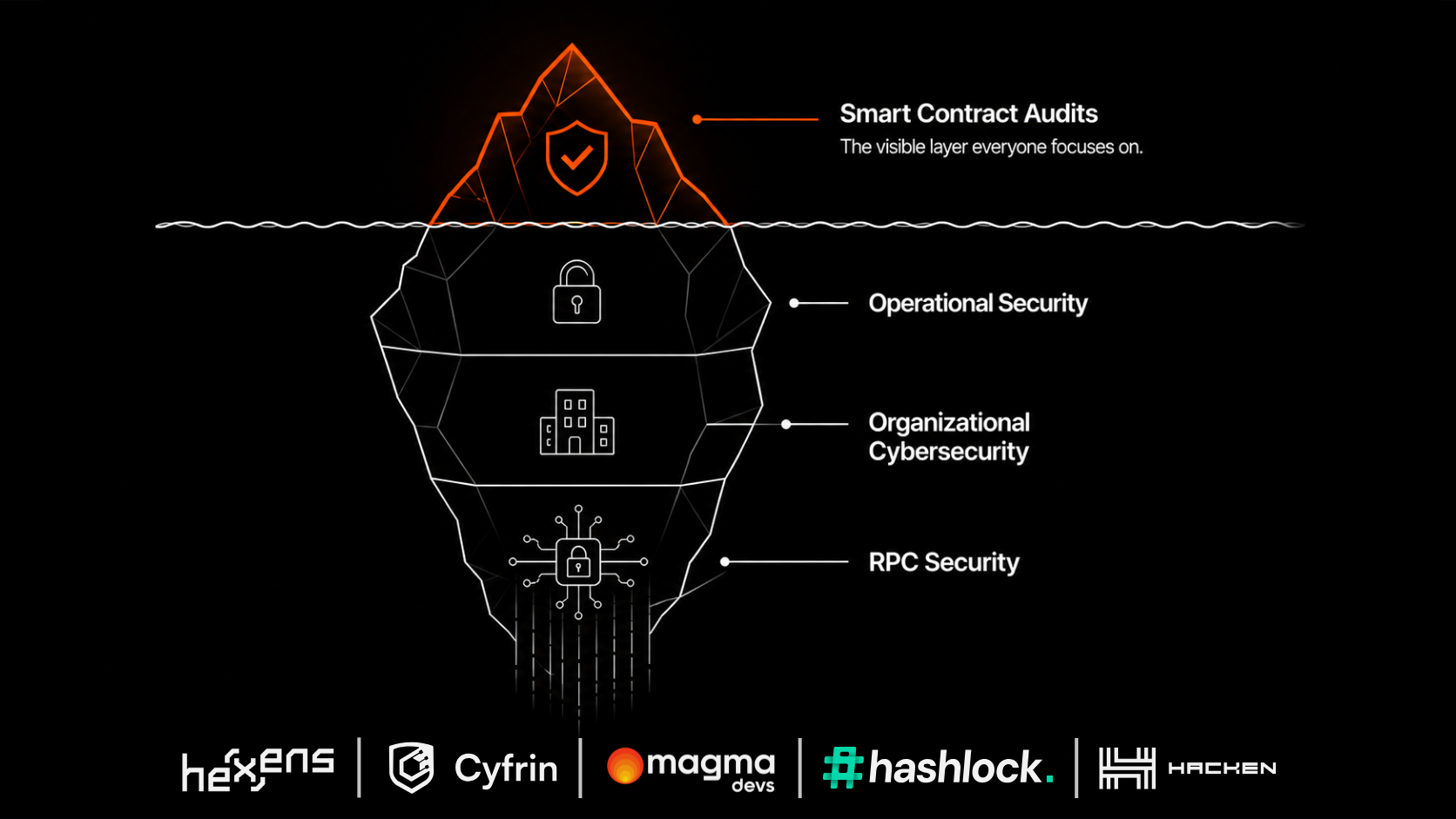

Most blockchain applications depend on RPC infrastructure every second.
But many teams still treat RPC as a simple technical utility: something you plug into once, monitor lightly, and only think about when something breaks.
That mindset is dangerous.
For critical blockchain applications, your RPC layer is not just plumbing. It is the path your application uses to read blockchain data, send transactions, check balances, verify activity, and respond to users.
If that path fails, your product can fail with it. If that path returns bad data, your product may make bad decisions. If that path slows down, your users feel it immediately.
And if your entire application depends on one provider, one endpoint, or one routing logic, you have created a single point of failure in one of the most important parts of your infrastructure.
What is RPC in simple words?
RPC is the way your application talks to a blockchain.
For example, when your application needs to know whether a transaction was confirmed, what a wallet balance is, or what the latest block is, it usually asks an RPC provider. The RPC provider acts like a gateway between your product and the blockchain network.
For many teams, that gateway becomes invisible. It works most of the time, so people stop thinking about it. That is exactly the problem.
The risk is not that RPC fails every day. The risk is that when it does fail, many teams discover that they were more dependent on it than they realized.
The single-provider trap
Using one RPC provider is simple. It is fast to set up. It may even work well in the early stages. But as your product becomes more important, the same setup becomes fragile.
A single RPC provider can create several types of risk:
1. Downtime risk
If your provider has an outage, your app may lose access to blockchain data or transaction submission. For a user, this can look like stuck transactions, missing balances, failed withdrawals, delayed confirmations, or broken product flows.
2. Latency risk
Even when a provider is technically online, it may become slow. For users, slow infrastructure feels like a broken product. They do not care whether the problem is your app, the blockchain, or a third-party provider. They only see that the experience is not working.
3. Rate-limit risk
As usage grows, your provider may throttle requests or enforce limits at exactly the wrong time. This often happens during market volatility, high transaction activity, token launches, liquidations, or other moments when reliability matters most.
4. Data accuracy risk
The most dangerous RPC issue is not always no response. Sometimes the bigger issue is a wrong, stale, delayed, or inconsistent response. If your system trusts one provider blindly, it may not know when something is off.
5. Vendor dependency risk
When your application depends deeply on one provider, switching becomes harder over time. Your monitoring, error handling, pricing, SLAs, internal tools, and operational habits may all become tied to that provider. That reduces leverage and increases operational risk.
"We use a top-tier provider" is not a full strategy
Using a strong provider is important. But it is not the same as having a resilient RPC strategy.
Even excellent providers can experience issues. No provider can remove every risk across every chain, every region, every traffic pattern, and every edge case.
The question is not whether your provider is good. The real question is:
What happens when your provider is slow, wrong, rate-limited, or unavailable?
If the answer is "our team will manually respond," you do not have resilience. You have an incident response plan. That is not enough for critical infrastructure.
What a stronger RPC setup looks like
A more resilient setup does not depend on one provider alone. It usually includes:
- Multiple RPC providers
- Automatic failover
- Performance-based routing
- Provider health checks
- Response validation
- Monitoring and alerts
- Clear visibility into provider behavior
- Chain-specific routing logic
In simple words, your application should not blindly ask one provider and hope for the best. It should be able to compare, route, fail over, and detect problems before users are impacted.
Where Smart Router fits
Magma's Smart Router is designed to make the RPC layer more reliable, secure, and operationally manageable. Instead of forcing teams to depend on one provider, Smart Router routes requests across multiple providers and helps teams reduce dependency on any single endpoint.
It can support provider redundancy, automatic failover, performance-aware routing, RPC response validation, provider-level observability, and better control over critical blockchain access.
The goal is simple: make RPC infrastructure behave more like an enterprise-grade layer, not a fragile external dependency.
The real question for your team
If your blockchain product depends on RPC, ask yourself this:
If our primary RPC provider fails or returns bad data tomorrow, how quickly would we know, how quickly would we recover, and how much would users notice?
If the answer is unclear, your current setup is probably weaker than you think.
RPC is no longer just a developer setting. For serious blockchain applications, it is a reliability and security layer. And it should be treated like one.
How exposed is your RPC stack?
Take the 2-minute Secure RPC Assessment and get a personalized risk report.
Run the assessment